Arenal Volcano National Park 2026: Things to Do, Tips & What to Expect
A simple guide to visiting Arenal Volcano
Planning a trip to Costa Rica?
Then Arenal Volcano National Park is probably already on your list — and for good reason.
But here’s the truth most travel blogs skip: Arenal is incredible, but it’s also one of the most commercialized destinations in Costa Rica. If you go in with the wrong expectations, you’ll leave underwhelmed. If you go in with the right ones, it’s a highlight of any Costa Rica trip.
This 2026 guide covers everything you need to know before you go — what’s worth it, what to skip, what it’ll actually cost, and how to plan your time in the region well.
And if you’re planning a wider Costa Rica trip, start with the full experience at Copa de Árbol Beach & Rainforest Resort.
Where Is Arenal Volcano?
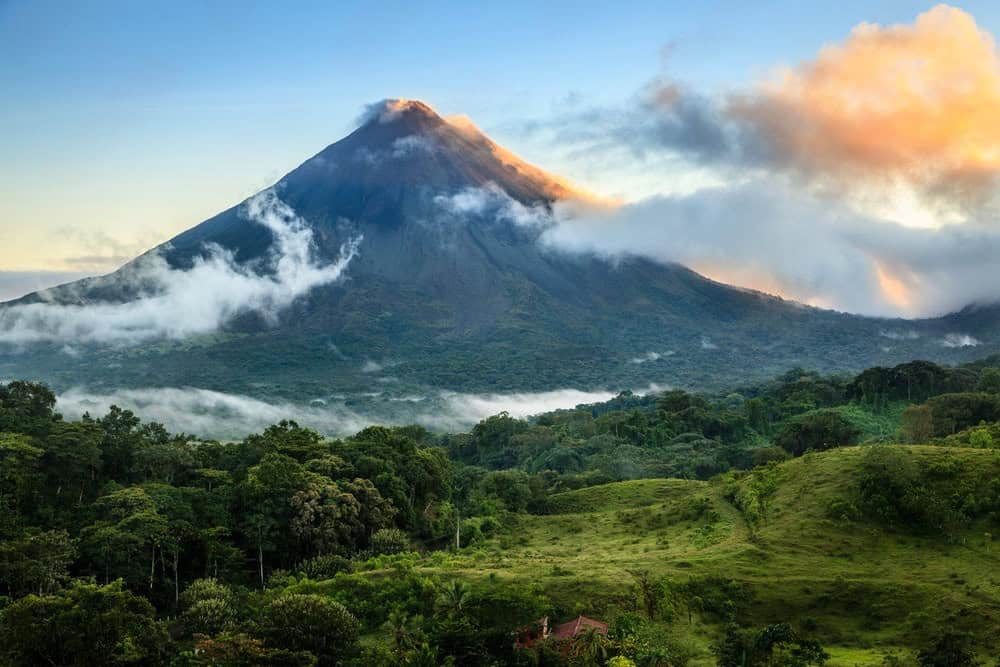
Arenal Volcano is located near the town of La Fortuna de San Carlos in northern Costa Rica, in the Alajuela Province.
- About 2.5–3 hours from San José (roughly 150 km via Route 702 or the Ciudad Quesada highway)
- About 2.5 hours from Liberia (Guanacaste), making it accessible from both main airports
- Surrounded by tropical rainforest and the vast Lake Arenal, the largest lake in Costa Rica
- Elevation: 1,633 meters (5,358 feet) at the summit
La Fortuna is the main gateway town, with hotels, restaurants, tour operators, and gear shops at every price point. The park entrance is about a 25-minute drive from La Fortuna’s town center.
Is Arenal Volcano Still Active In 2026?
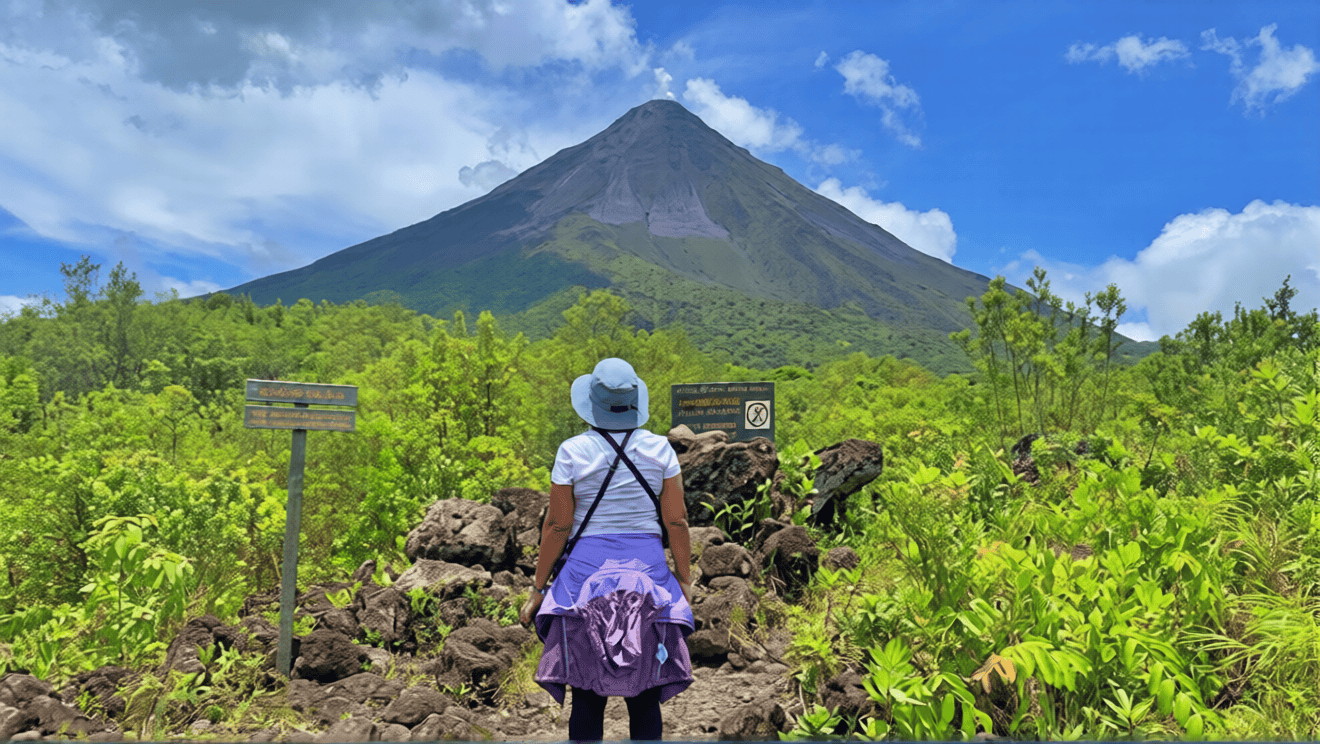
Yes — but not in the way most visitors expect.
Arenal erupted almost continuously for 42 years between 1968 and 2010, making it one of the most reliably active volcanoes in the Western Hemisphere. The 1968 eruption was catastrophic — it destroyed three villages and killed 87 people, burying the area under lava and ash that you can still walk across today.
Since October 2010, the volcano has entered what volcanologists call a resting phase. It’s not extinct — geothermal activity continues underground (which is what feeds the region’s famous hot springs), and steam occasionally rises from the summit crater. But visible lava flows are unlikely in 2026.
What this means practically: you’re not visiting to see active eruptions. You’re visiting to hike across dramatic preserved lava fields, explore dense rainforest, spot wildlife, and soak in geothermal hot springs — and that combination is genuinely spectacular.
Important: Summit climbing is prohibited and illegal. The last person who attempted an illegal summit hike died from toxic gas exposure. Stay on the marked trails.
Best Time to Visit Arenal
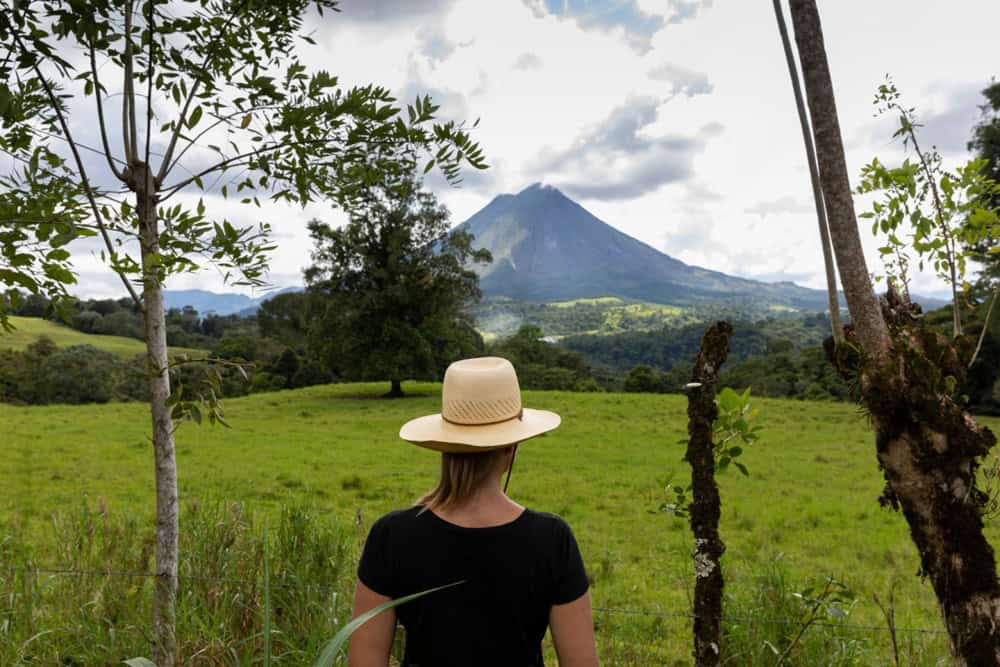
Arenal sits in one of the rainiest regions of Costa Rica, so cloud cover is a real factor whenever you visit.
Here’s how to plan:
Dry Season: December – April
The best window for clear volcano views. February and March offer the highest chance of seeing the summit without cloud cover. Early mornings (arriving right at the 8:00 AM opening) give you the best visibility before afternoon clouds build.
Green/Rainy Season: May – November
More rain, more cloud cover, more lush vegetation — and significantly fewer tourists. Trails can get muddy, so waterproof boots are essential. You may not see the summit clearly, but the rainforest is at its most alive and the waterfalls are thundering.
The honest truth: Arenal’s microclimate means the volcano is frequently cloud-covered even in dry season. Many visitors don’t get a clear view regardless of when they visit. Go for the overall experience — lava fields, wildlife, hot springs — not just the volcano view.
Best time of day: Arrive at 8:00 AM when the park opens. Cloud cover is lowest in early morning, wildlife is most active, and you’ll have trails largely to yourself before midday crowds arrive.
How To Get To Arenal Volcano National Park

Recent Posts
Categories
Submit Your Email For Discounts
Join our mailing list and receive special offers and discounted vacation packages directly to your email.
By clicking “Submit”, you are signing up to recieving emails from us. You can unsubscribe whenever you like.
From San José
- Rental car: 2.5–3 hours via Route 702 or through Ciudad Quesada. Most flexible option.
- Shuttle: Shared shuttles run daily from San José hotels to La Fortuna for around $45–55 per person. Book through your hotel or operators like Interbus or Greyhound.
- Public bus: Budget option (~$5) but takes 4–5 hours with a change in Ciudad Quesada.
From Liberia (Guanacaste)
- Rental car: About 2.5 hours via Route 1 and Route 142.
- Shuttle: Available but less frequent than from San José; budget around $55–70.
Getting to the Park from La Fortuna
The park entrance is about 15 km west of La Fortuna on Route 142. Options:
- Rental car or 4WD: Most convenient, especially for visiting both sectors
- Taxi: Taxis wait at park entrances and can be negotiated for the return trip
- Tour shuttle: Many operators include transport in their tour packages
Tip: There are two separate sectors — the Volcano Sector (main visitor center, lava trails) and the Peninsula Sector (lake access, quieter wildlife trails). They’re a few minutes apart by car. Both are included on one entrance ticket if you visit on the same day.
What To Do In Arenal Volcano National Park
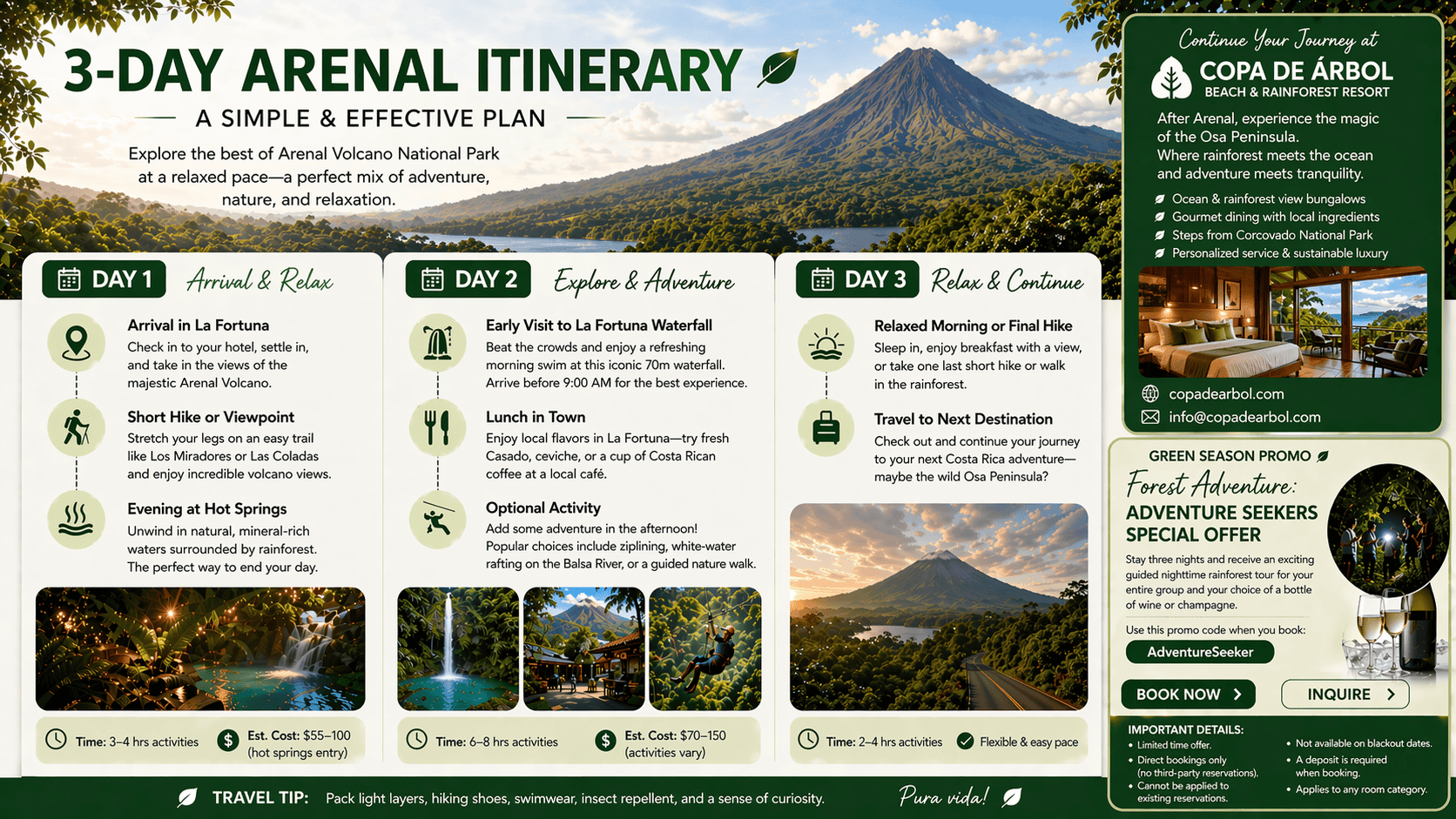
1. Hike the Lava Trails (Volcano Sector)
Walking across preserved lava fields with the nearly-perfect cone of Arenal towering above you is one of the most unique experiences in Central America. The Volcano Sector has four trails — you can complete all of them in a half-day.
Las Coladas (Lava Flow Trail) The signature hike and the one not to miss. About 2 km across the hardened 1968 lava fields, with multiple viewpoints of the volcano. The trail involves a metal staircase section and some uneven volcanic rock — wear proper hiking shoes. Most visitors turn back at the first viewpoint; keep going to the second and third for superior views and far fewer people. Allow 1.5–2 hours.
El Ceibo Trail A 2 km loop through secondary rainforest, best for wildlife spotting. This trail consistently delivers howler monkeys, coatis, and diverse bird species. There was a famous giant Ceiba tree here for decades — it fell in a 2023 storm, but the trail remains excellent for wildlife.
Heliconias Trail A short 600m paved connector lined with bright pink heliconia plants. Easy, flat, and suitable for limited mobility. Takes about 20 minutes.
Los Miradores (Lookout Trail) Panoramic viewpoints across the volcanic landscape and Lake Arenal. Good for photography, especially in golden hour light.
2. Explore the Peninsula Sector
Often overlooked by visitors who only do the Volcano Sector, the Peninsula Sector offers a completely different experience. The main trail is mostly flat and partially paved — better for families with young children or anyone with limited mobility.
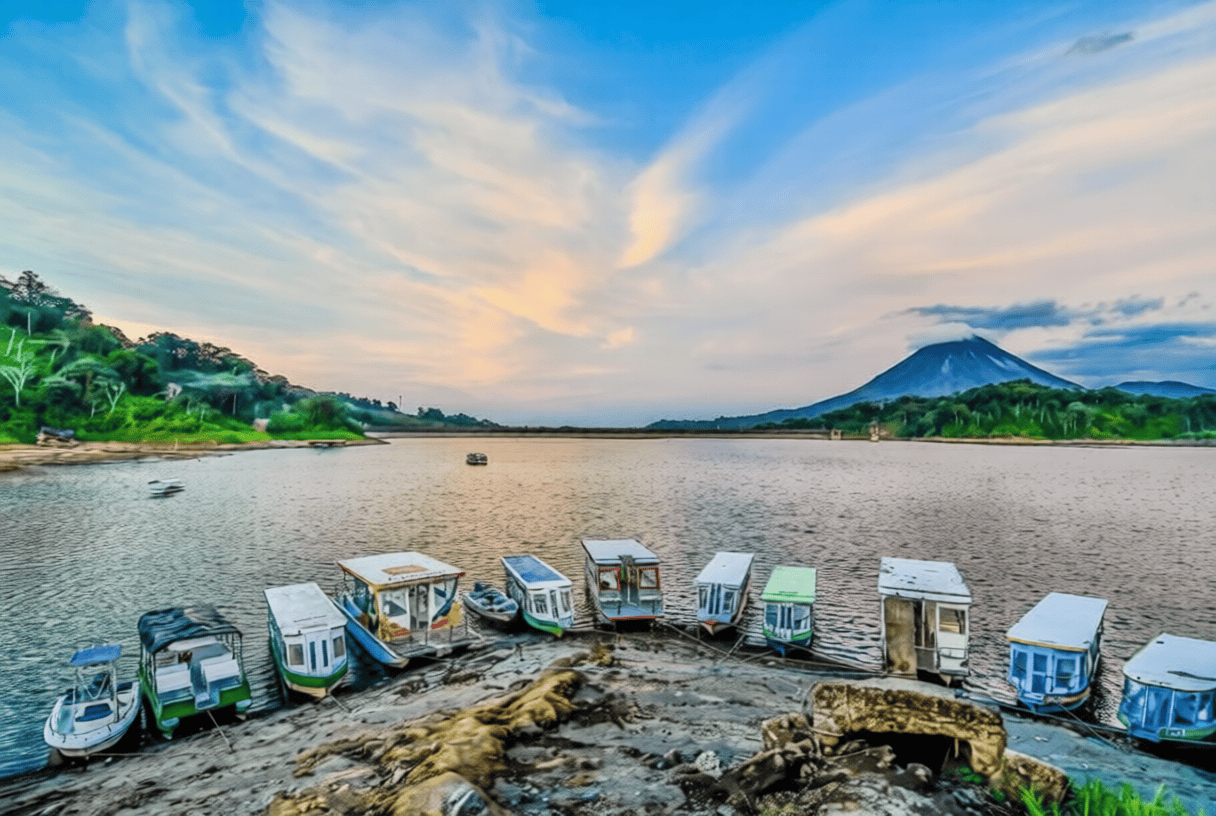
The trail follows the lakeshore to a viewing tower about halfway through, then continues down to the shores of Lake Arenal. Wildlife here is often easier to spot because fewer visitors pass through — expect Great Curassows, Keel-billed Toucans, and various waterbirds.
3. Visit La Fortuna Waterfall
Technically just outside the national park, La Fortuna Waterfall is a 70-meter cascade that drops into a turquoise jungle pool. It’s one of the most photographed spots in Costa Rica — and the descent is no joke. Expect 500+ steep stairs down, which means 500+ stairs back up. Go early morning to avoid crowds and the midday heat. Swimming is possible depending on water conditions.
Entrance fee: $20 per adult.
4. Soak in the Hot Springs
Arenal’s geothermal activity feeds dozens of hot springs around the region — this is the activity most visitors say was the highlight of their trip. Hot springs are located outside the national park along the road toward the volcano. See the full hot springs section below.
5. Wildlife Spotting & Birdwatching
Arenal’s position in a biological corridor means the park supports remarkable biodiversity despite its relatively compact size. The park and surrounding area have recorded over 850 bird species, and the forest trails regularly deliver:
- Howler monkeys (you’ll often hear them before you see them)
- White-faced and spider monkeys
- Two and three-toed sloths (move slowly, look up into the canopy)
- Toucans and keel-billed toucans
- Coatis
- Blue-crowned Manakins
- Jaguars and tapirs (in the park, rarely seen)
Best wildlife windows: early morning (6–9 AM) and late afternoon (3–5 PM) when animals are most active. Move slowly and quietly — wildlife here is present but subtle.
6. Adventure Activities in the Wider Arenal Region
The Arenal area is one of Costa Rica’s best regions for adventure tourism:
- Ziplining: Multiple operators in the La Fortuna area; prices around $60–90
- White-water rafting: The Toro and Sarapiquí rivers offer class III–IV rapids; full-day tours from ~$85
- Kayaking on Lake Arenal: Calm water, volcano views, and good bird spotting
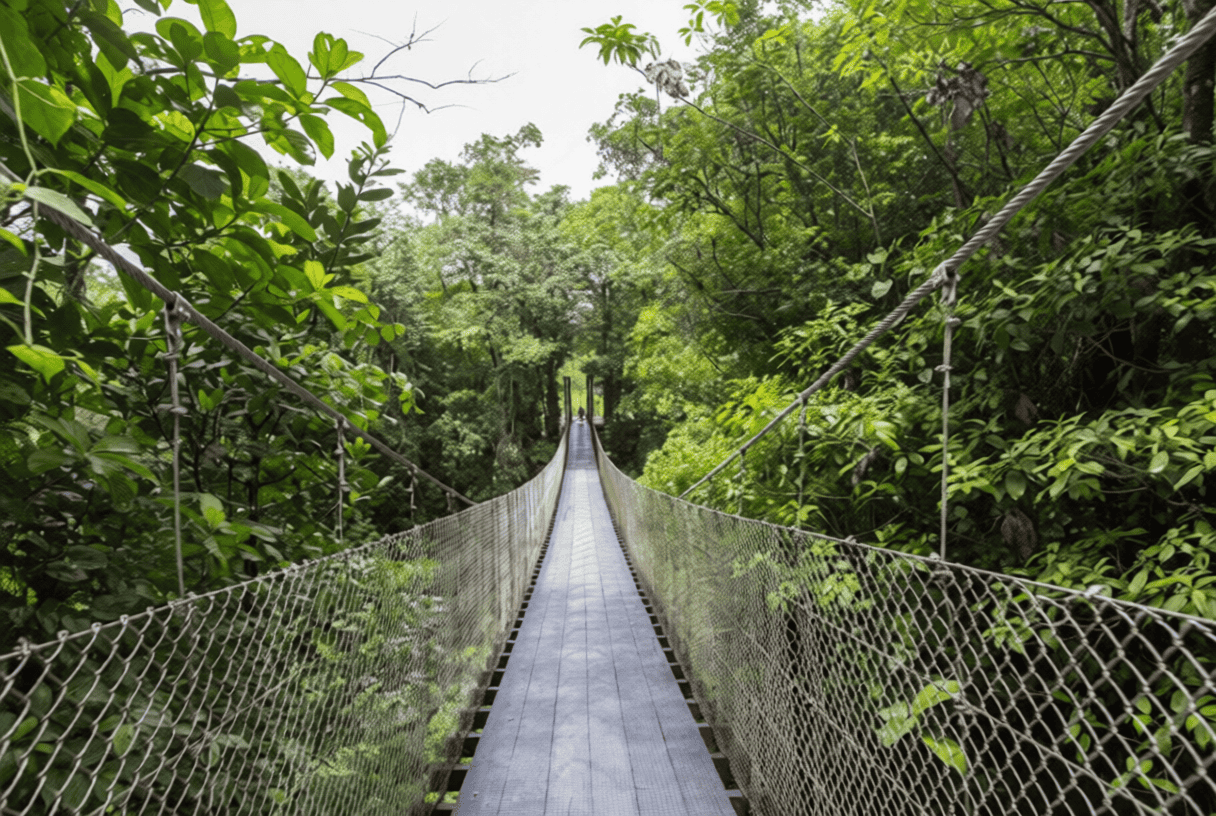
- Arenal Hanging Bridges (Mistico Park): $26–45 for a series of suspension bridges through the rainforest canopy — a completely different perspective on the forest
- Arenal 1968 Private Trail: $12 entry for 2.5 miles of hiking with 16 hanging bridges — better value for budget travelers wanting the hanging bridge experience
Love adventure? Our Corcovado National Park guide covers one of Costa Rica’s most wild and remote destinations for the truly adventurous traveler.
Hot Springs: Which One Is Right For You?
Arenal is a strong introduction—but it’s only one side of Costa Rica.
For something more immersive, many travelers continue south to the Osa Peninsula.
This region, home to Corcovado National Park, offers:
- Denser wildlife
- Fewer crowds
- A slower, more natural pace
If you have more time and want to build on your Arenal stay, our 7-Day Rainforest & Ocean Itinerary from SJO to Copa de Árbol can help you plan the next part of your trip.
Is Arenal Worth Visiting?
Arenal Volcano is absolutely worth visiting—but it’s best experienced with the right expectations.
It offers:
- Accessibility
- Variety of activities
- A beautiful volcanic landscape
But the most memorable trips don’t stop there.

Frequently Asked Questions
Not necessarily. Many hotels offer shuttle services, and tours often include transport. However, having a car gives you more flexibility to explore at your own pace.
No, hot springs are separate from the national park and usually require an additional entrance fee.
Yes, Arenal is one of the most family-friendly destinations in Costa Rica. Many trails are easy, and activities like hot springs and wildlife spotting are accessible for all ages.
Most activities are moderate at most. The main challenge for many visitors is the heat and humidity rather than the terrain itself.
It depends on the season. During peak months, it’s best to book in advance. In quieter periods, you can often arrange activities once you arrive.

Andrea - Costa Rican Travel Guide
Andrea is a seasoned traveler and an expert on Costa Rica. She has spent a number of years travelling around Costa Rica and exploring it's natural wanders. Andrea is an avid birdwatcher and loves spending time outdoors hiking and taking photos of her favourite birds.

Submit Your Email For Discounts
Join our mailing list and receive special offers and discounted vacation packages directly to your email.
By clicking “Submit”, you are signing up to recieving emails from us. You can unsubscribe whenever you like.