Costa Rica’s Hummingbirds: Facts, Birdwatching Guide and More
Unveiling the secrets of Costa Rica's Hummingbirds
The Fiery-Throated Hummingbird hovers at eye level, its gorget flashing emerald and ruby as it defends a heliconia patch. This isn’t footage from a nature documentary. It’s a typical morning at Copa De Arbol, where Costa Rica’s 53 documented hummingbird species make the country one of the planet’s premier birding destinations.
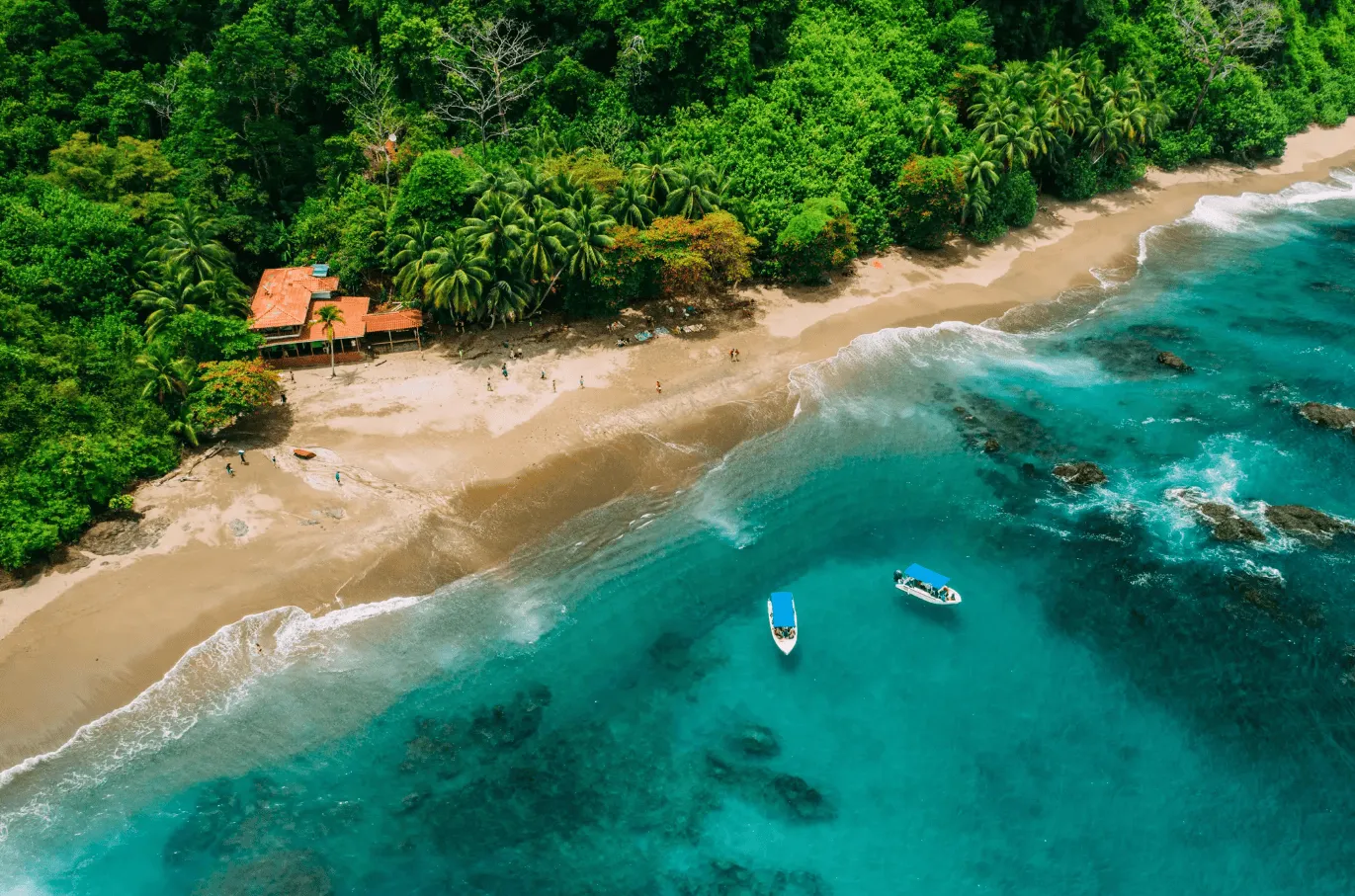
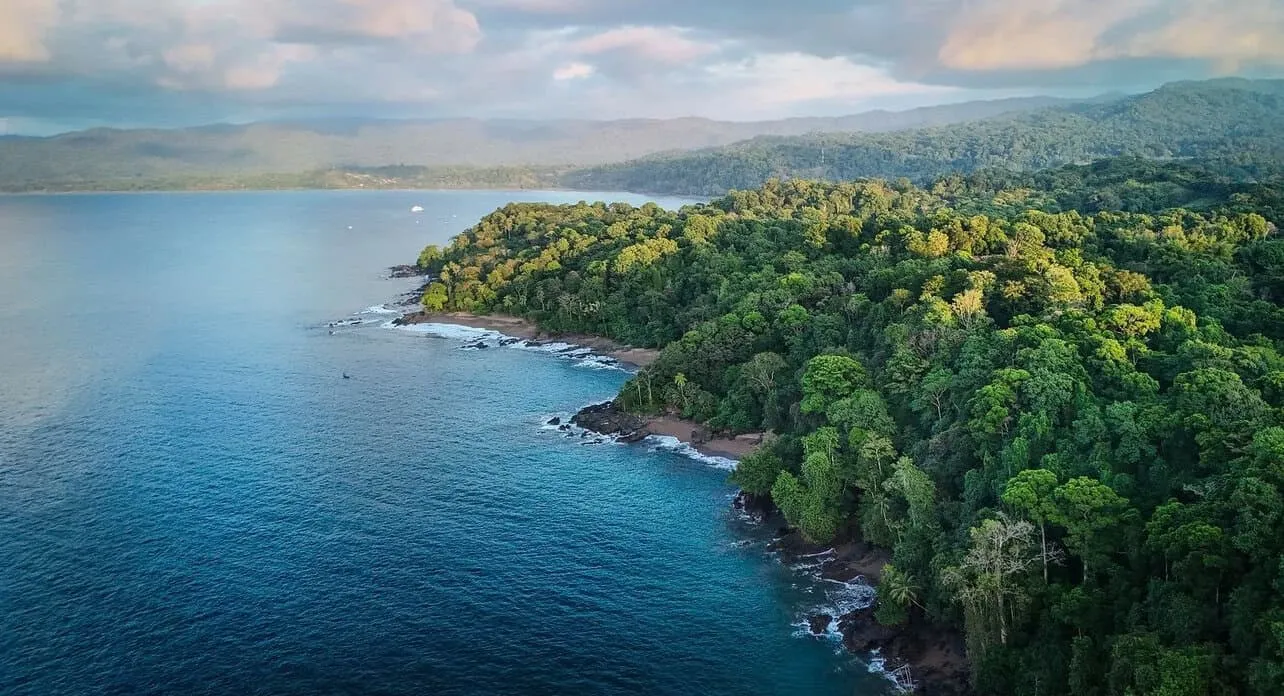
With roughly 15% of the world’s hummingbird diversity concentrated in an area smaller than West Virginia, Costa Rica punches well above its weight. The Osa Peninsula sits at a unique convergence point where lowland Pacific rainforest meets coastal mangroves and foothill cloud forest – creating habitat for 18 resident hummingbird species, with seasonal visitors pushing that number even higher.
At Copa De Arbol, you don’t need to choose between comfortable accommodations and authentic wildlife encounters. Our native flowering gardens attract multiple species daily, while our naturalist guides lead customized birding tours through primary rainforest just steps from your cabin. We’ve designed our eco-luxury experience around what serious birders actually need.
Why the Osa Peninsula is Different
Most visitors hit the typical circuit – Monteverde for cloud forest species, Arenal for volcanic slope birds, Manuel Antonio for accessible tourism. They’re not wrong, but they’re missing something. The Osa Peninsula holds 2.5% of the world’s biodiversity in less than 0.001% of its surface area. For hummingbirds specifically, this concentration means you can observe highland, lowland, and coastal specialists without driving for hours between elevation zones.
Our property borders Corcovado National Park, widely considered the most biodiverse place on Earth by National Geographic. The forest here is primary growth – meaning old, complex, undisturbed habitat that supports specialist species you won’t find in secondary growth areas. When our guides take you on morning walks, you’re entering an ecosystem that’s functioned undisturbed for millennia.
Did you know Costa Rica has both Pacific and Caribbean coastlines—meaning you can watch the sunrise on one beach and the sunset on another in the same trip?
Species You'll Actually See Here
Here are the species reliably observed on our property and surrounding trails, organized by where and when you’re most likely to encounter them.
Garden and Property Species
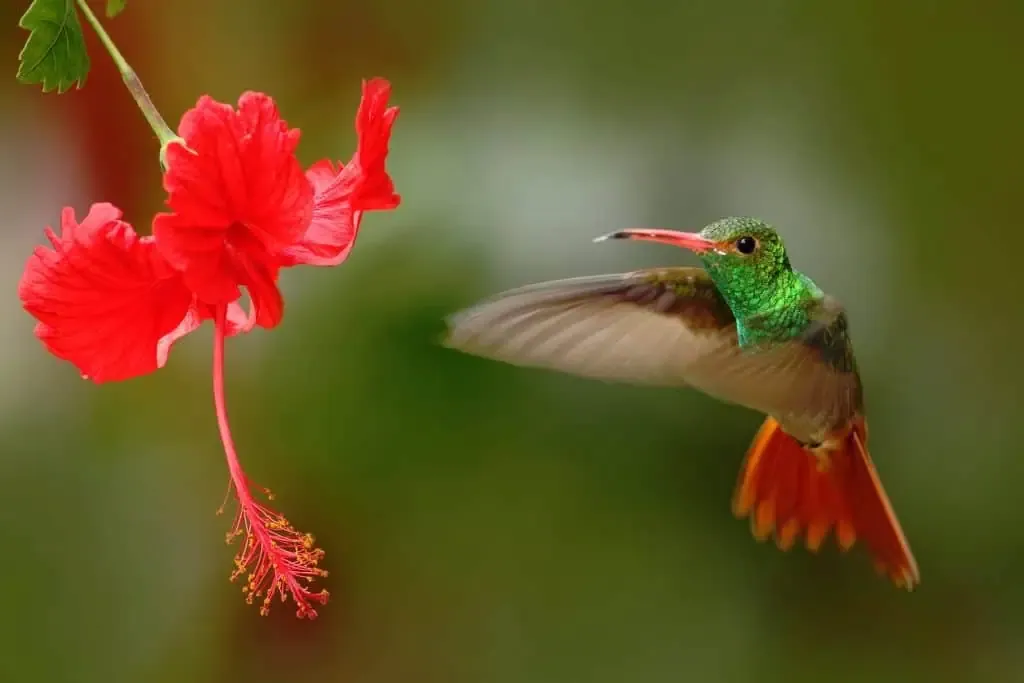
Rufous-Tailed Hummingbird
The background hum of Copa De Arbol. Males defend territories around our ginger and heliconia plantings, creating constant motion and sound. Their vivid orange-rufous tails catch morning light beautifully. These birds are aggressive defenders, often chasing away larger species. Best viewing: 6:30-8:00 AM and 4:30-6:00 PM when they’re most actively feeding.
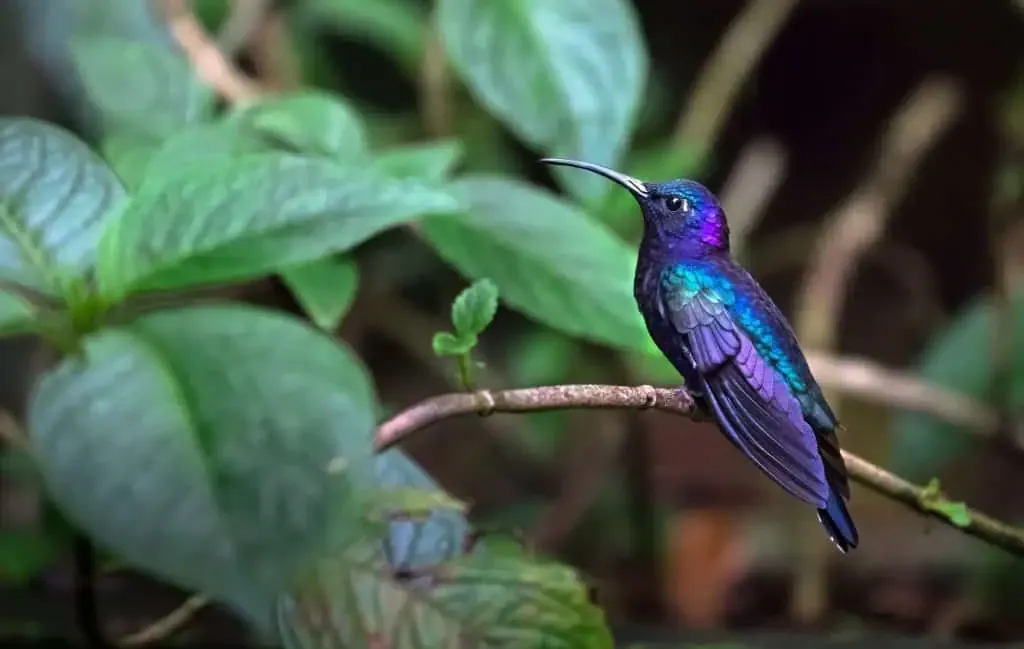
Violet Sabrewing
Costa Rica’s largest hummingbird, and it acts like it knows. Males are deep violet with curved bills perfectly adapted for heliconia flowers. They dominate prime feeding spots, and smaller species time their visits around the Sabrewing’s patrol routes. Watch near cabin 3’s salvias at dawn – there’s a resident male who’s held that territory for three seasons. Females are green with less dramatic coloring but equally impressive size.
Charming Hummingbird
Lives up to its name. Males display purple-red iridescence on their throats and perform elaborate courtship flights near forest edges. These displays involve steep climbs followed by rapid descents with distinctive vocalizations. Peak display season runs December through March. Look for them in the transition zone between our gardens and primary forest.
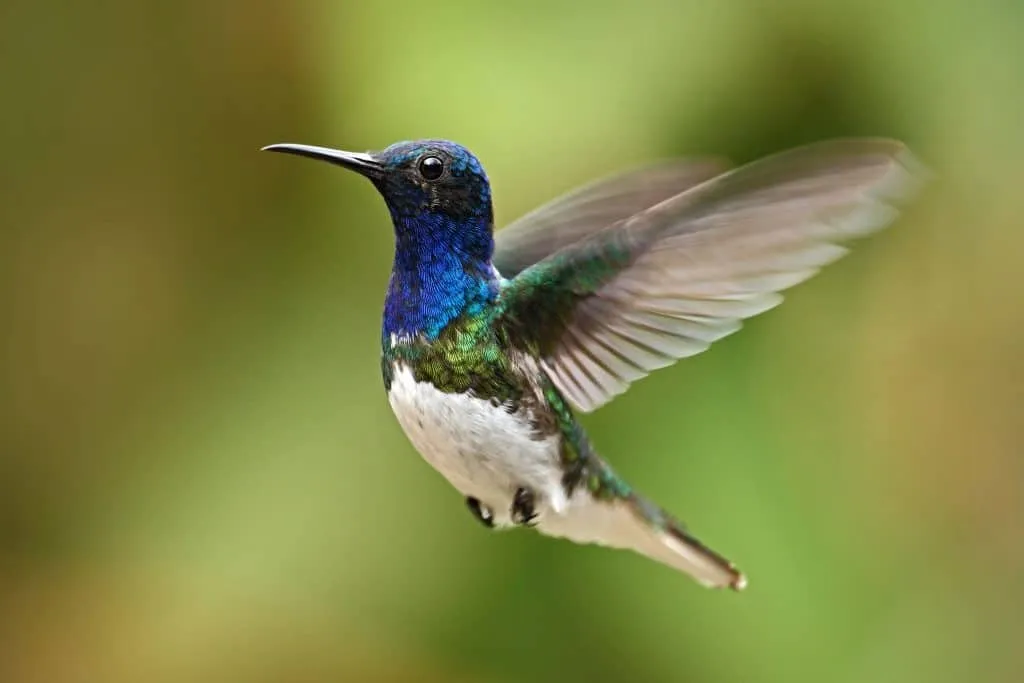
White-Necked Jacobin
The tuxedo of hummingbirds – males sport brilliant blue hoods, white bellies, and distinctive white neck rings. They prefer forest edges and clearings with mixed flowering plants. Often spotted along our main trail system between 100-300 meters elevation. Females lack the dramatic coloring but share the species’ characteristic thick neck.
Forest Trail Species
Green-Crowned Brilliant
Large, robust, and easy to identify. Bronze-green body with a blue throat patch that changes intensity depending on light angle. These birds cling to flowers while feeding rather than hovering, giving photographers better opportunities for sharp images. Common along our mid-elevation trails where Inga trees bloom.
Coppery-Headed Emerald
One of Costa Rica’s special birds – endemic to the country and western Panama. The gleaming copper crown is unmistakable. White chest contrasts sharply with green body. This is a larger forest species that prefers mature rainforest canopy. Our guides know several reliable territories in the forest behind the lodge.
Violet-Crowned Woodnymph
Males are show-stoppers with forked tails and brilliant violet-emerald plumage that shifts in sunlight. They prefer shaded areas near streams and forest understory. Listen for their sharp, distinctive chips before you see them. Most reliable along our waterfall trail.
Specialized Habitat Species
Mangrove Hummingbird
A threatened species that exists nowhere else on Earth except Costa Rica’s Pacific mangroves. Gray-green plumage provides excellent camouflage in mangrove vegetation. These birds feed primarily on Pelliciera rhizophorae, the tea mangrove, which has limited distribution. We arrange specialized early morning excursions to nearby mangrove areas during peak activity periods (January-April).
Cinnamon Hummingbird
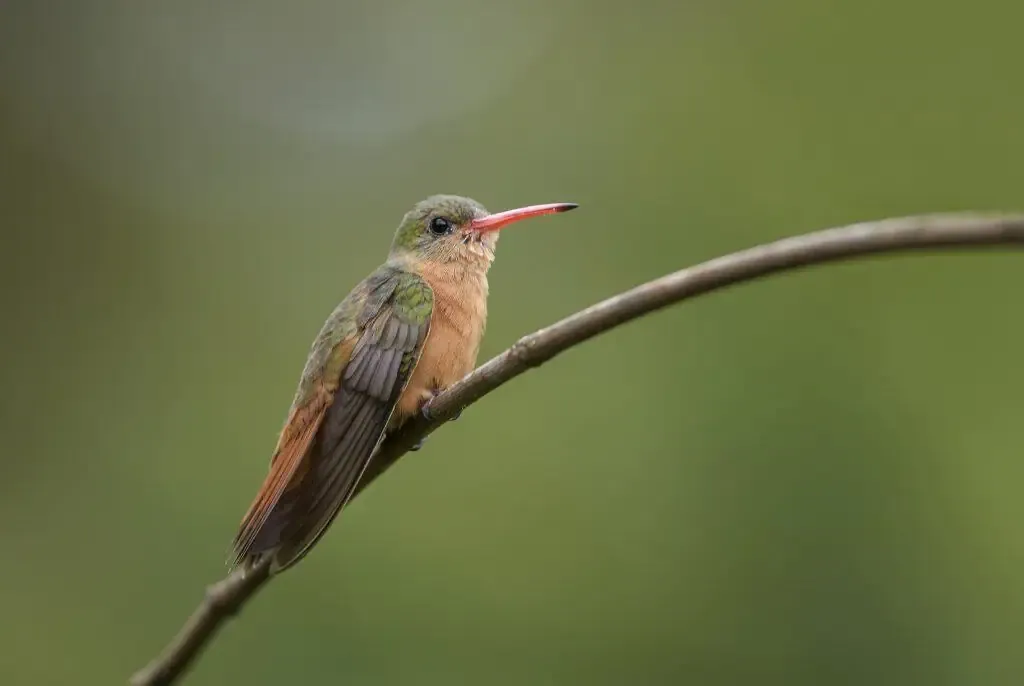
Common in drier areas and gardens. Warm cinnamon-colored belly and breast with metallic green back and head. These birds can visit 1,000-2,000 flowers daily to meet their nectar requirements. Most active in our more open garden areas and along forest edges where flowering shrubs grow.
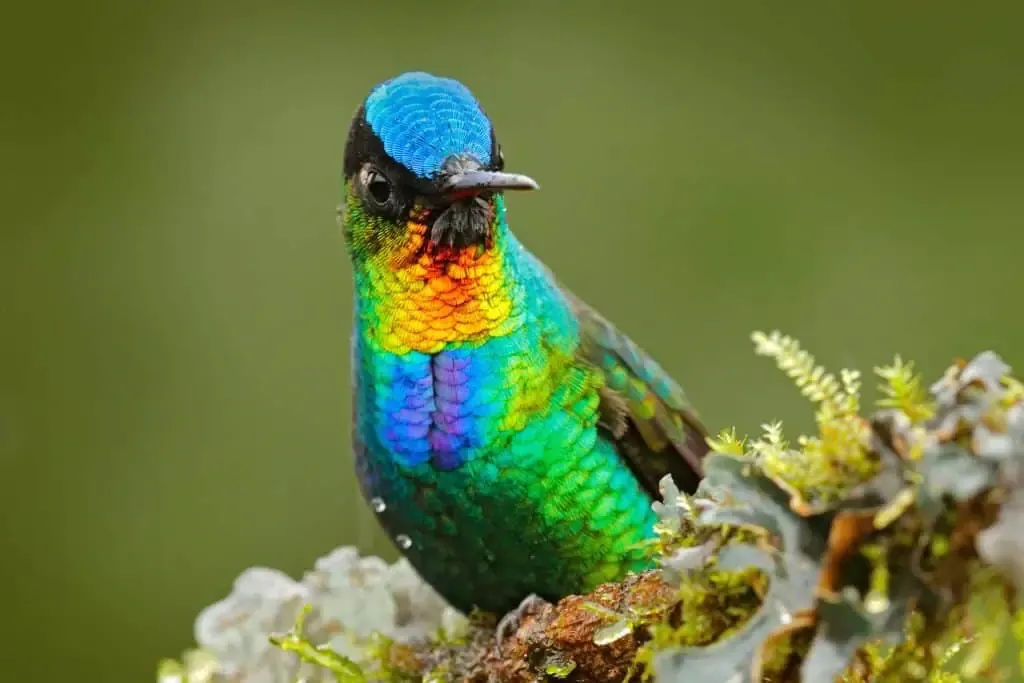
Fiery-Throated Hummingbird
Technically a higher elevation species (Arenal area), but occasionally observed in our upper trails during certain times of year. The radiant multi-colored gorget is worth the wait. If you combine an Osa Peninsula stay with time at Arenal, this species becomes much more reliable.
What Makes Copa De Arbol Different for Birders
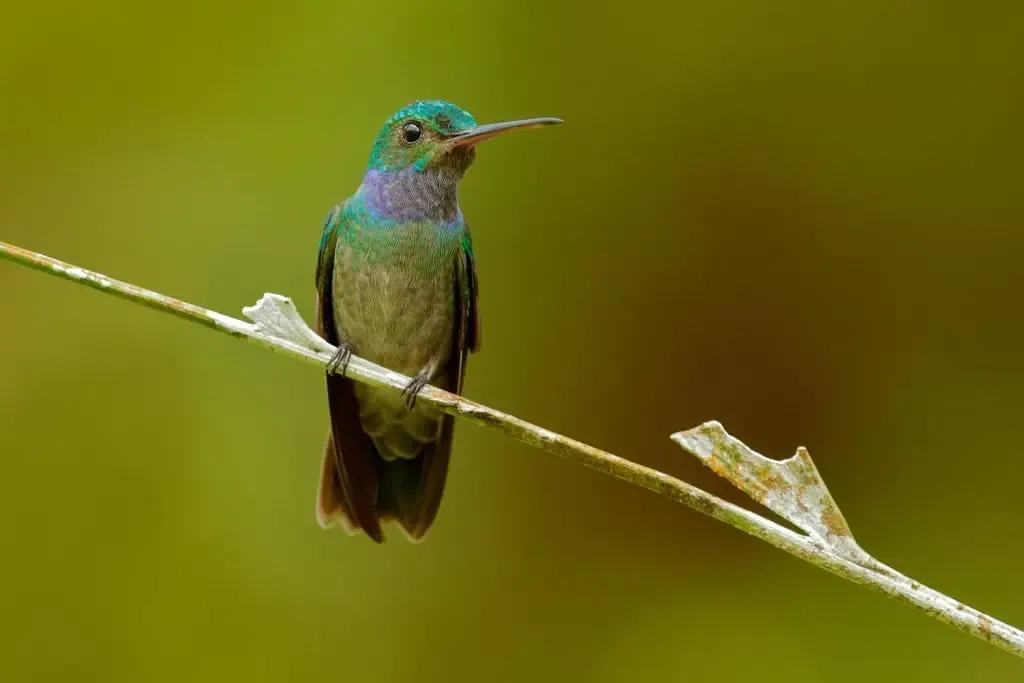
We’ve hosted everyone from families on their first international trip to ornithologists conducting research surveys. Here’s what keeps serious birders coming back:
Native Plantings, Not Feeders
Many lodges rely on sugar-water feeders to attract hummingbirds. We use native flowering plants – heliconia, ginger, salvias, passionflowers, and dozens of other species that evolved alongside these birds. This approach attracts a wider variety of species and lets you observe natural feeding behaviors rather than artificial aggregations. It’s also more sustainable and doesn’t create dependency.
Guides Who Actually Know Birds
Our lead naturalist Jorge has 23 years of experience in the Osa Peninsula. He doesn’t just identify birds – he knows individual territories, understands seasonal movements, and can predict where specific species will be based on flowering cycles and weather patterns. When you book a birding tour with us, you’re getting specialized expertise, not a general nature guide reading from a field guide.
Flexible, Customized Tours
Families with young children get shorter morning walks focused on garden species with guaranteed sightings. Photographers get positioned in optimal locations based on light conditions and bird behavior. Life-listers targeting specific species get custom itineraries. A couple from Seattle last month wanted only early morning photography sessions followed by spa time – it worked out beautifully.
Location, Location, Location
Step out of your cabin and you’re already in hummingbird territory. Our property’s position between multiple habitat types means species diversity is naturally high without requiring vehicle access.
Planning Your Hummingbird-Focused Stay
For Families
Our family cabins are positioned close to the main gardens where hummingbird activity is most concentrated. Parents tell us it’s worth it to sit on the balcony with morning coffee while kids spot birds from their own vantage point.
Book your family-friendly vacation and mention hummingbirds when you reserve – we’ll prepare age-appropriate field guides and checklists for your kids.
For Couples
Combine morning birding with afternoon spa treatments or sunset beach dinners. We’ve had couples use birding as the anchor activity for their days, then fill afternoons with relaxation.
Book a romantic escape and ask about our couples’ nature experience package that pairs birding with other activities.
For Serious Birders
You know what you want – early starts, specialized locations, time to work a territory. Our guides will take you to areas where specific species are reliably found. Bring your long lens; we can position you for optimal shooting angles.
If you’re targeting specific species for your life list, contact us in advance and we’ll design an itinerary around those birds. We can also arrange custom adventure options designed for photographers and dedicated birders.
How to Actually See More Hummingbirds
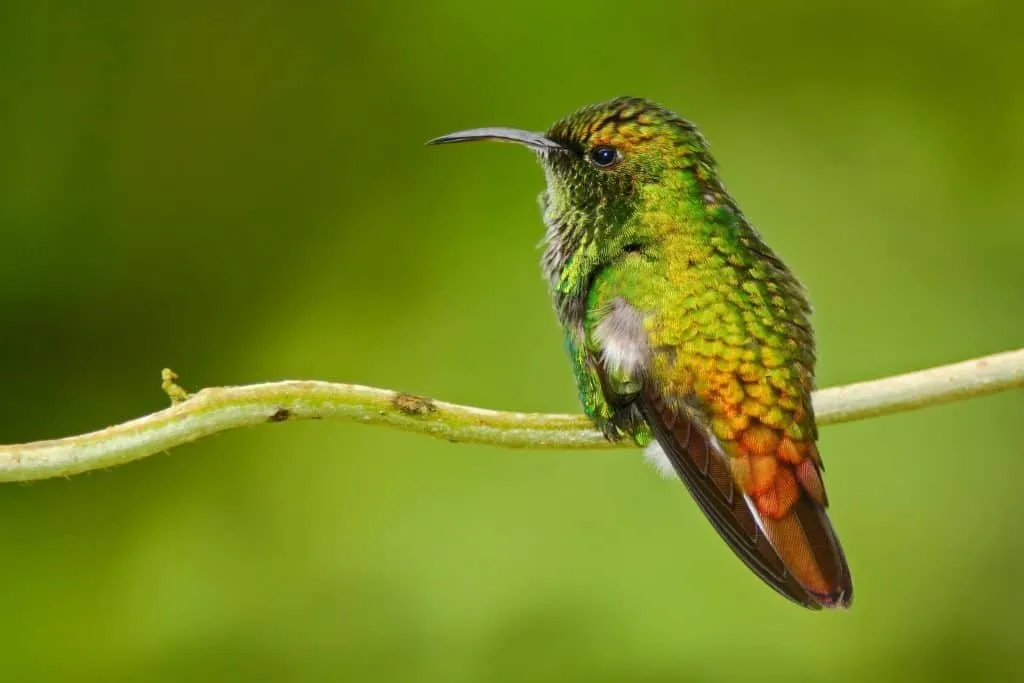
After decades of guiding in Costa Rica, here’s what actually works:
Timing Matters More Than People Think
Hummingbirds are most active during two windows: 6:00-8:30 AM and 4:30-6:30 PM. Mid-day activity drops significantly because flowers produce less nectar and birds conserve energy during peak heat. If you’re only birding mid-day, you’re missing 70% of the action.
Learn to Listen First
Wingbeats produce the characteristic humming sound – some species hit 80-100 beats per second. You’ll hear them before you see them. Each species also has distinctive vocalizations. Violet Sabrewings make sharp chips. Rufous-Tailed Hummingbirds produce metallic calls. Train your ear and you’ll identify birds without seeing them.
Stake Out Flowering Plants
Don’t wander aimlessly. Find a cluster of tubular red or orange flowers (heliconias work best) and wait. Resident males patrol territories on predictable routes. Position yourself and let the birds come to you. Photographers: this is your secret weapon.
Understand Territory Behavior
Larger species like Violet Sabrewings dominate prime feeding areas. Smaller species wait for gaps in patrol routes or feed at less desirable flowers. Watch territory boundaries for 15 minutes and you’ll see the pattern – then you’ll know exactly where and when each species appears.
Wear Neutral Colors
Bright reds and oranges can trigger territorial aggression. Neutral greens, browns, and grays let you observe without becoming part of the interaction. Some photographers report birds approaching too closely when wearing red, which sounds ideal but actually makes focusing difficult.
Ready to Experience It Yourself?
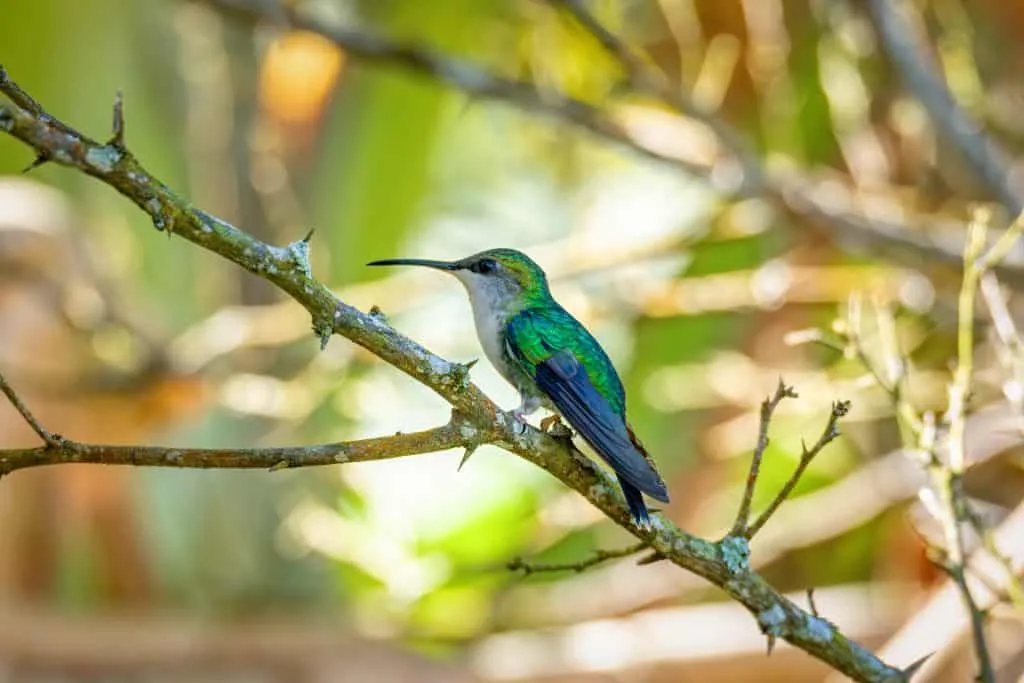
We’ve guided thousands of visitors through their first hummingbird encounter. Some arrive as curious travelers and leave as dedicated birders. Others come specifically for these birds and leave with photographs they’ll display for years.
Book your stay today and mention hummingbirds when you reserve. Our team is standing by to answer questions about specific species, best travel dates, photography equipment, or anything else you need to plan your trip.
Frequently Asked Questions
Costa Rica has 53 documented hummingbird species, representing roughly 15% of global hummingbird diversity. This includes both resident species that live year-round in Costa Rica and seasonal migrants that pass through during specific months. The Osa Peninsula specifically supports 18 resident species with additional seasonal visitors. Different elevation zones host different species – lowland rainforest species differ from cloud forest and high-altitude species.
Hummingbirds are present year-round in Costa Rica, but the dry season (December through April) offers optimal viewing conditions. Clearer weather means better visibility, more predictable bird behavior, and easier trail access. Morning temperatures are comfortable and birds are highly active at dawn. However, the green season (May through November) shouldn’t be dismissed – fewer tourists, lush vegetation, and excellent birding, especially in the early morning before afternoon rains.
Hummingbirds show peak activity during two daily windows: 6:00-8:30 AM and 4:30-6:30 PM. Dawn activity is particularly intense because birds are recovering from overnight torpor and need immediate nectar to restore energy reserves. Late afternoon feeding prepares them for the night ahead. Mid-day activity drops significantly as flowers produce less nectar and birds conserve energy during peak heat. Serious birders schedule activities around these windows.
Binoculars significantly improve your experience. 8×42 or 10×42 magnification works best – powerful enough for detail but not so heavy you’ll tire of holding them. For photography, you’ll need at least a 200mm telephoto lens, preferably 300-400mm for frame-filling shots. Fast shutter speeds (1/2000 second or faster) are essential to freeze wing motion. We can arrange binocular rentals locally if you prefer not to travel with optical equipment.
Artificial feeders are prohibited in national parks and protected areas to prevent disrupting natural behaviors and creating dependency. However, many private lodges and hotels legally maintain feeders. Copa De Arbol takes a different approach – we use native flowering plants that attract hummingbirds naturally. This provides more authentic observations of natural feeding behavior and attracts a wider variety of species than feeders alone.
Absolutely. Hummingbirds are perfect for introducing kids to birding because they’re colorful, fast, and dramatic. We structure family birding tours differently than adult tours – shorter duration (30-45 minutes), focusing on the most visually striking species, with activities that keep kids engaged like identification checklists and scavenger hunts. Our family cabins are positioned near gardens where hummingbird activity is concentrated, so kids can bird-watch from the balcony.
The Osa Peninsula holds 2.5% of global biodiversity in a tiny geographic area. Unlike Monteverde (cloud forest specialist) or Arenal (volcanic slope species), the Osa offers habitat diversity – lowland Pacific rainforest, coastal mangroves, and foothill transition zones all within short distances. This means you observe highland, lowland, and coastal specialists without extensive travel. Corcovado National Park, which borders our property, is considered the most biodiverse place on Earth by National Geographic.
In gardens with flowering plants, hummingbirds often feed within 3-6 feet of stationary observers. They’re not particularly afraid of humans if you remain still and quiet. Some photographers report birds approaching within arm’s length when they’re positioned near prime feeding territories. However, approaching birds actively or attempting to touch them is inappropriate and can disrupt feeding behavior.
The Mangrove Hummingbird is listed as Endangered by the IUCN. This species is endemic to Costa Rica’s Pacific mangroves and exists nowhere else on Earth. Fewer than 1,000 individuals are estimated to remain due to mangrove habitat loss from coastal development and shrimp farming. We arrange specialized excursions to observe this species in protected mangrove areas. Several other species are considered threatened due to habitat fragmentation outside protected areas.
Light rain doesn’t stop hummingbird activity – birds still need to feed. However, heavy rain reduces activity significantly as birds shelter in protected areas and conserve energy. The green season in Costa Rica typically features morning sunshine with afternoon rains, making early birding tours highly productive even during rainy months.
Hummingbirds prefer tubular flowers with high nectar content, often red or orange in color. Common attractors include heliconias, gingers, passionflowers, salvias, hibiscus, and various native orchids. These plants evolved specifically for hummingbird pollination – their flower shape excludes bees and other insects while perfectly accommodating hummingbird bills. Copa De Arbol maintains extensive native plantings of these species throughout our gardens.
Recent Posts
Categories
Add your email for discounts
Join our mailing list and receive special offers and discounted vacation packages directly to your email.
By clicking “Submit”, you are signing up to recieving emails from us. You can unsubscribe whenever you like. SMS rates may apply.

Andrea - Costa Rican Travel Guide
Andrea is a seasoned traveler and an expert on Costa Rica. She has spent a number of years travelling around Costa Rica and exploring it's natural wanders. Andrea is an avid birdwatcher and loves spending time outdoors hiking and taking photos of her favourite birds.
Did you know the Green Season is ideal for birdwatching? This period marks the migration of many species and the breeding season for the stunning Resplendent Quetzal, offering unique sighting opportunities, that you won't get in any other season!
Add your email for discounts
Join our mailing list and receive special offers and discounted vacation packages directly to your email.
By clicking “Submit”, you are signing up to recieving emails from us. You can unsubscribe whenever you like. SMS rates may apply.